Blue is the Warmest Color

Or The Life of Adèle: chapters 1 and 2, as it is known in France, the Cannes Film Festival Palm D’Or winner is an intimate and intense sexual awakening story of a young student named Adèle, as she becomes the muse, inspiration and sexual partner of a budding new gay artist Emma, who is on the verge of being discovered in the art world.

This is very much a love story where the physical sensual love making is central to the story. While exploring and coming to terms with her sexuality, Adèle experiments with various people who come into her life, when she begins to suspect she may be attracted to women.

Filmed in tight close-ups, the story plays out on Adèle’s face and those of the people around her as she goes through an emotional journey of self-discovery. One woman in particular becomes an immediate and powerful attraction that could be termed ‘love at first sight’. 

Surprisingly honest in their performances by the two lead actresses, especially Greek/French actress Adèle Exarchopoulos as Adèle, are so natural and subtle, we immediately sense that we are getting a peak into a very private and personal inner life of a young teen as she deals with her emotions.

Adèle is an attractive young woman with a vacant aimless expression that seems to draw in the viewer.  She appears to float through life without any plan and is happy to just have someone in her life that will fulfill her sexual needs. 

Be aware, the film features some extremely explicit sexual content. French/Tunisian director Abdellatif Kechiche, who also directed the excellent award winning film The Secret of the Grain (2007), doesn’t shy away from showing us the Kama sutra of lesbian love making full on, leaving little to the imagination. 

Based on a graphic novel and told completely from Adèle’s perspective, we the audience feel as if we are living the experiences with Adèle as the camera follows her documentary style and we slowly become immersed in her emotionally tumultuous life while she navigates teenage sex and high school peer pressure. 

The camera technique used can sometime be a little disorienting as we are pressed up close to every nuanced emotion playing on Adèle’s facial features with minimum amounts of the environments shown in which she finds herself. 

We follow Adèle in a passionate relationship with Emma, played by Léa Seydoux, an older artistic woman, who exposes her to the fine arts world as they are influenced by prominent literary and philosophical works. Playing out over a number of years, we see the relationship as it goes through several stages to its emotional conclusion.

Steven Spielberg commented about the jury members’ unanimous decision to award the film top honors at the Cannes film festival that they were all under the spell of the film and its two actresses. And there is definitely a mesmerizing quality about the film and the performances that draws one in and keeps our attention as we are witness to a girl’s unspoken diary of inner feelings.

Blue is the Warmest Color may not be for everyone and is considered quite controversial, but it may be one of the most enthralling love stories in recent years.

JP

Faroeste Caboclo (Brazilian Western)

More a tragic love story than a western, this film resembles a Brazilian version of Scarface (1983). It’s a surprisingly ambitious and mature film from first time director René Sampaio, just out of film school, who was inspired by Brazilian folksinger Renato Russo’s popular 80s song ‘Faroeste Caboclo’ that he grew up with, to make this cinematic adaptation. 

The song tells the incredible story of a poor black kid from the sticks, João do Santo Cristo (Fabrício Boliveira), whose father is murdered by a corrupt policeman. Raised by his mother, he eventually leaves his home town in Salvador, Bahia, after she dies, to make a living as a carpenter in the big city of Brasília, with his cousin. 

The film is shot in spaghetti western style in the Brazilian outback and moves along at break-neck pace keeping the viewer engaged as we follow João’s fateful journey to the big city where he meets and falls in love with Maria Lúcia (Isis Valverde), an architect student from a wealthy family. As we see their relationship blossom while he aspires to make a new life for himself, we want to see the underdog succeed and win the heart of his girl, but João is destined to suffer more than most for his love. 

Taking place in the 1980s, the film doesn’t shy away from the brutal racism and class system that still exists today in many parts of Brazil and the lawlessness and corruption that people with few resources face. The violent gritty graphics are reminiscent of Tarantino’s camera style, and visually emulates City of God and Pulp Fiction (1994).

When João discovers that there’s a lack of good quality marijuana in the community, he puts his carpentry skills aside and decides to put his farming skills to use, growing his own quality weed. His burgeoning enterprise goes over well with the locals, but he soon gains the attention of the local drug dealer, who also happens to be his girlfriend’s spurned ex-boyfriend.

The real revelation in Brazilian Western (2013) is the intensely riveting performance by lead actor Fabrício Boliveira as João, who easily carries the film and keeps our attention as a man full of childlike wonder and enthusiasm, but with the reckless courage to take on anyone who wrongs him. His passionate portrayal is what keeps the audience hooked into the film.

When Maria’s father, a government official, discovers her relationship with João, which she’s been hiding from him, she is immediately disowned. The jealous local drug dealer also catches up with João at this point and he’s put in jail, where he’s tortured to force Maria into a relationship with her drug dealer ex. Now abandoned by her father, Maria must make a deal with the devil to save the one she loves from further pain.

The chemistry between João and Maria comes through with tenderness and passion. Their fateful love affair is palpable and when they are shown making love it’s often in secret, with dangerous consequences for both if they’re caught.

In typical Brazilian melodramatic fashion, this powerful love story is a classic tale of two people reaching across racial, social and economic divides, risking everything for happiness. 

Brazilian Western premiered at the TIFF (Toronto International Film Festival) this year and surely ranks up there with some of the best films to come out of Brazil in recent years such as Behind the Sun (2002), City of God (2003) and Elite Squad (2008). 

JP

A Royal Affair

A splendid Danish drama directed by Nikolaj Arcel, A Royal Affair (2012) is set in the 18th century and is based on the true story of a love affair between the English Queen of Denmark and a small-town doctor from Germany, who became the confidant to the mentally challenged Danish King.

It’s the age of reason and enlightenment, with philosophers such as Voltaire, Spinoza and Locke challenging old traditional ways of thinking about the universe and man’s place in it, while advocating scientific research and equality for all mankind. But in many European countries it was still considered a crime to question society’s entrenched faith based notions.

Forced into an arranged marriage to her mentally unstable cousin, King Christian VII of Denmark, the youngest daughter of the Prince of Wales, Caroline Matilda, played by Alicia Vikander, recently seen in Anna Karenina (2012), The Fifth Estate (2013) and Hotell (2013), is devastated when she discovers his odd childish behavior and habit of visiting brothels and bringing prostitutes to his bed chambers.

After the birth of their son and heir, the two royals can’t stand to be near one another, so the King goes on a tour of Europe, during which his condition seems to worsen until he meets a German doctor, Johann Friedrich Struensee, who is able to connect with the King like no one else can by appealing to his playful childish nature. 

When the newly appointed physician, played by the charismatic Mads Mikkelsen (The Hunt), saves the young Prince and heir to the throne from an outbreak of smallpox using new medical advances, he becomes a trusted figure in the royal court and quickly catches the eye of the frustrated Queen.

The good doctor and the Queen, finding they have a mutual passion for improving people’s lives, want to use the latest medical techniques to help everyone who suffers from the smallpox epidemic. But the royal court, controlled by religious fundamentalists, refuses to invest any time or money on the country’s poor. 

If you thought that the dystopian future vision depicted in Elysium (2013), of a divided world where the wealthy 1% control and arbitrarily manipulate government policy and regulation to suit their own purposes, while oppressing the majority 99% of humanity, was an unrealistic exaggeration, look no further than our own recent history of 18th century royal courts and aristocratic abuses and neglect of the common working people.

Due to censorship laws which prohibit enlightened free thinking, Denmark’s citizens lived in extremely dire and cruel conditions. Working together and using their influence over the King to challenge the religious leaders, the queen and the German physician were able to make many humanitarian and socially beneficial reforms that were ahead of their time and an inspiration to the rest of Europe.

When the Queen and the doctor are discovered having a romantic love affair, the aristocracy quickly uses the indiscretion to take back control of the country, sentencing the two lovers to a tragic fate. 

Danish cinema has undergone a resurgence in recent years that we haven’t seen since the 1980s with classics like Babette’s Feast (1988) and Pelle the Conqueror (1987). Recent award winning films In a Better World (2011), Melancholia (2011), A Royal Affair (2012), The Hunt (2012) and A Hijacking (2013) have put Denmark back on the cinematic map as a country that’s producing some noteworthy talent with extraordinary directors like Lars von Trier, Nicolas Winding Refn, Thomas Vinterberg and Nikolaj Arcel.

Nominated for best foreign film Oscar, A Royal Affair is authentically portrayed and shot in actual locations in Czech Republic, and is visually sumptuous and genuinely enlightening for the history it reveals. It’s a stunningly photographed gem not to be missed.

JP

Wadjda

You can’t help but fall in love with Wadjda, the adorable savvy little 10 year old, sneaker wearing rebel, who won’t take no for an answer as she uses her spunky creativity and imagination to overcome obstacles, stopping at nothing to get what she wants. 

This charming coming of age tale takes place in a barren sand swept suburb of Riyadh, Saudi Arabia, where women are treated as property for no other reason than to allow men to stay in power and confine women to the home. 

While we follow the fun-loving Wadjda (Waad Mohammed), on her quest as she devises clever ways to save up enough money to purchase a bicycle so she can ride together on equal terms with her best friend Abdullah, the film highlights the daily discrimination faced by women in an oppressive male dominated society.  

As religious fundamentalism is used to keep women from performing even the most basic of activities like driving a car, riding a bicycle, opening a bank account or just being in the presence of a man without completely covering their faces and bodies, women are prevented from achieving any semblance of a normal life.

Wadjda is a blissfully innocent girl going to school, who just wants to play alongside the rest of the boys.  But everywhere she goes she discovers that in this highly segregated society she lives in, girls are prohibited from doing many things that boys take for granted.

Much like Circumstance (2011), which was also directed by a woman and recounted the experiences of a girl living in Tehran under an oppressive authoritarian Islamic society, Wadjda (2012) is also directed by a woman and recounts the plight of women living in Riyadh, Saudi Arabia under strict Islamic rule.

You get the feeling that in this inhospitable society, things are eventually going to turn out badly for Wadjda. That she will lose her innocence when she is forced to face the harsh limitations placed on her, but she remains optimistic and persistent, managing to accommodate her conflicting aspirations.

We are given a glimpse into a veiled, little known area of the world, where deep rooted tribal ways and traditions are still followed. Wadjda’s mother hasn’t been able to produce a son for her husband and according to tradition he can therefore exercise his right to pursue a new bride, in effect abandoning his wife and daughter.

Saudi Arabia’s first female film director Haifaa Al-Mansour, in her first feature film, made at great personal risk, has created a sensitive, intimate portrayal of life in Riyadh as seen from the perspective of not only Wadjda, but all women and girls in general. However, this is the kind of film that may provoke serious discussions among western audiences as the cultural, religious and physical restrictions placed on women can be quite disturbing. 

Still, the film, like Wadjda herself, holds out hope for the plight of women in the Middle East. By exposing the injustices they suffer, the next generation of boys and girls may take on the many challenges of the future to improve life for everyone.

The following films are also noteworthy entries of social and culturally relevant films where young women must face the injustices of their strict tribal and religious societies; The White Balloon (1995), The Circle (2000), Baran (2001), Maya (2001), Ten (2003), At Five in the Afternoon (2003), Osama (2004), Offside (2007), Circumstance (2011).

JP

Gravity

Being shipwrecked in space is every astronaut’s nightmare, and watching Gravity on an IMAX screen gives one as close a sense of being adrift in space as any of us are likely to experience without leaving the ground.

Four and a half years in the making, Mexican director Alfonso Cuarón’s new film Gravity (2013), stars Sandra Bullock and George Clooney as Space Shuttle astronauts Ryan Stone and Matt Kowalski on a routine mission to make repairs to satellite equipment from outside the shuttle, when a chain reaction of events quickly escalates into a worst-case scenario.

This terrifyingly suspenseful thriller mixes the authentic procedural disaster drama of Apollo 13 (1995), with the horror of one woman’s survival while stranded in space fighting against insurmountable odds as Ripley did in Alien (1979). 

This, however, is not a science fiction film, rather as we see familiar landmarks on the surface of the earth passing below, the film looks and sounds very much like the space exploration documentaries seen on IMAX screens like Blue Planet (1990) and Space Station (2002), making it feel like the events are actually happening right now 372 miles above the earth.

The film is shown completely from the astronaut’s weightless viewpoint. There are no cuts to Houston control rooms or family members anxiously waiting on the ground or any news reports being broadcast on TV sets. There’s virtually no connection with Earth, giving a claustrophobic feeling and total immersion into the free floating fear and vulnerability experienced by the astronauts.

The authentic look of the film, down to the smallest details, makes it difficult not to believe that what we are seeing is absolutely real or could be real. Realistic space disaster films with astronauts in jeopardy are not new, but Alfonso Cuarón, who also directed Y Tu Mamá También (2001) and Children of Men (2006), has created a whole new visual vocabulary that helps to make the genre so much more tangible and immediate.

The absolute silence of space makes the threat of an approaching debris field and inevitable devastation, so much more unnerving, as we never know who or what will get hit or what the cascading consequences will be. Getting hit by even the smallest piece of shrapnel traveling at the speed of a bullet could be fatal in space where one’s survival depends entirely on an intact functioning space suit.

While Sci-fi and Star Trek fans will certainly love the technical aspects of this brilliantly created zero G space adventure, Sandra Bullock’s emotionally captivating performance as a medical engineer on her first shuttle mission, is the central focus of Gravity, making it accessible to a much broader audience.

The astronauts are completely helpless while they watch as flying debris orbiting the earth obliterates and tears through their ship and suits. As more satellites are destroyed and communication is eliminated, the surviving astronauts must rely on their own resources and draw on every ounce of courage to come up with a plan that will get them back to earth in one piece.

By the end of the film you will be as exhausted as the people that are experiencing this extraordinary and harrowing tale. Gravity is one hell of an exhilarating ride you won’t soon forget.

JP

The Hunt (Jagten)

This powerful Danish drama stars Mads Mikkelsen (A Royal Affair) as Lucas, a divorced father, who becomes the target of a close-knit community’s wrath when he’s accused of sexually molesting one of the children at the kindergarten where he works.

Thomas Vinterberg’s provocative film touches on the very difficult and sensitive issue of child abuse and how the fearful, merciless persecution brought to bear by a secluded clannish community on the loathsome individual they believe to be responsible, can sometimes be misguided. 

The story is told from the accused’s perspective as we witness how Lucas becomes the victim of an innocent lie. It’s a dark cautionary tale of how quickly a community can turn against even its most trusted citizens when it comes to protecting children from sexual predators. 

Unable to believe that a child would ever lie or make up such a story, Lucas’ closest friends and family turn against him, while he tries to convince them that no such act ever occurred to no avail. Much like The Fugitive (1993), there is absolutely no tolerance to hear what Lucas has to say, even with his reputation as a well-liked and respected citizen. 

Mads Mikkelsen as Lucas is absolutely riveting as a gentle man rebuilding his life after a divorce and custody battle, who sees his only son and new girlfriend slipping away as his world is completely turned upside down. With everyone quickly turning sinister, he is now a pariah, a social outcast shunned by society. 

Lucas is in fact loved by all the children at the school where he works, especially Klara, the young girl in question, who is his best friend’s daughter and has special needs. Because Lucas is the only one sensitive to her needs, she developed a bond with him, maybe even a crush. But when he rejects a gift she makes for him, she misunderstands and takes it as a personal rejection.

Out of anger she makes up a story about Lucas. Everyone involved seems to do the right thing to protect the girl from further exposure to Lucas but Klara is shocked at how the adults and her parents react so strongly to her claims. Embellished by the adult’s imaginations and fears, they assume the worst before the girl realizes the consequences of what she had said.

It’s scary to realize how powerless we are as individuals when cut off from our social network and the fragility and importance of that social network to our wellbeing. The film’s disturbing but plausible story continues to haunt me long after viewing it as I became aware that a version of this scenario could happen to almost anyone in today’s fearful society.

Lucas, like most of us, really would have no other option but to leave his town and start a new life somewhere else, if it wasn’t for his strong conviction that he has done nothing wrong and hopes that the truth will eventually be revealed. Unfortunately, even if he were able to convince people of his innocence, his life would never be the same as there would always remain some doubt in the back of people’s mind. 

The Hunt (2012) is a thought provoking must-see drama that was nominated in the best foreign film category at the BAFTA Awards and nominated for the Palme D’Or at the Cannes film festival where Mads Mikkelsen’s stunning performance won him the best actor award.

JP

Prisoners

When two children go missing on the outskirts of a suburban community, a mysterious RV camper parked on the street is immediately suspected as a possible connection.

If you’ve ever seen French Canadian director Denis Villeneuve’s film Incendies (2010), you will know just how skillful he is with stories that take you on endlessly puzzling journeys and come to totally unexpected and shocking conclusions. Well, Prisoners (2013), Villeneuve’s first big budget Hollywood project is no exception and leaves you with that same disturbing impact at the end.

The film is reminiscent of other child abduction films like Without a Trace (1983) and Gone Baby Gone (2007), while adding some elements of Taken (2008) with the addition of a vigilante father who conducts his own search and rescue mission. 

In this particular case there are few likely suspects who may or may not have some connection to the crime. The father of one of the kidnapped children, Keller Dover (Hugh Jackman), is a very high strung paranoid type, who prides himself on being prepared for any emergency survival scenario. But in his frantic attempt to find his daughter we don’t know if he is helping or hindering the investigation.

The audience is kept as much in the dark as the detectives and parents are, while searching for and agonizing over the whereabouts of the two young girls and who is capable of such an unthinkable act.

It’s an extremely sensitive subject in today’s society where children go missing almost on a regular basis and are very seldom found alive if they are found at all. The case of Madeleine McCann, abducted while vacationing in Portugal, is one of the more high profile examples in which the girl has still not been found and where investigators focus sometimes mistakenly on the parents.

The first rate cast includes Jake Gyllenhaal as the weary perplexed officer Loki assigned to the case, bringing an appropriately calm and unnervingly restrained performance to the role. And Hugh Jackman plays his character with understandable desperation as he takes matters into his own hands when he feels the authorities are not doing enough to find his daughter. 

The movie centers on these two characters with very different mentalities and who use very different methods to reach their goals. One represents the rational analytical approach, the other is driven by his emotions and the certain knowledge that time is quickly running out if they hope to recover the children alive.

The movie felt a little on the long side at two and a half hours and lead us down a maze of false paths, or are they? We never know for sure which one of the two is on the right track. The surprising shock ending is well worth the wait and explains many of the questions we the audience and the characters puzzled over throughout the film.

This gripping drama unfolds at a deliberately steady pace, shot by Roger Deakins with a grim grey rainy look that gives a constant oppressive feeling as we see the suffering of all involved. I felt in expert hands as the film moves from one tension filled moment to the next and it was never boring. 

JP

iNumber Number

It’s not surprising that in the shantytowns outside Johannesburg, most cops have gone corrupt. Soweto is a land of lawlessness, where every cop goes through a dilemma; risk their lives on a daily basis to enforce the law for a meager salary, or join the crime lords and live like kings. 

The last two good cops left in Soweto township of South Africa are Chili (S’dumo Mtshali) and Shoes (Presley Chweneyagae). Against all odds they still manage to work together to put away the bad guys without any assistance from the rest of the corrupt police force. 

The film begins with an exhilarating opening sequence that has Chili’s cover blown and tied to a chair about to be tortured or killed. It’s Shoe to the rescue, but he has no weapons, only a walkie-talkie to communicate with his partner and no time to call for backup. Outnumbered, the two must work together to put a bold plan into action.

Writer and director Donovan Marsh, influenced by such masters of the gangster and heist genre as Tarantino and the Coen Brothers, tells a sometimes absurdly tragic/comic story of a hastily planned robbery of an armored money truck in transit, which is apparently common in the extremely dangerous poor parts of South Africa, where people are so desperate, they often resort to poorly thought out schemes to get rich quick.

Our cop buddies and best friends are an unlikely duo to be reckoned with; Chili is the hulking muscle with nerves of steel able to infiltrate any crime gang convincingly, while Shoes is the loveable experienced voice of reason on the outside looking in, making sure his partner doesn’t get himself killed.

The strikingly stylish sepia tinged images give a rich texture that exudes a feeling of oppressive heat. Visually, it almost felt like watching Danny Boyle’s Slumdog Millionaire (2008), with its extreme camera angles and filtered lenses giving an ant’s eye view of the scorched world that seems to give the camera, free to move into the smallest spaces, a life of its own and the resulting images are nothing short of spectacular.  

After being denied the reward owed to them, Chili, conflicted about continuing on their righteous path, decide to help a group of criminals to rob an armored truck and make some quick easy cash. Shoes reluctantly agrees to go along with the plan but in Soweto nothing goes as planned and soon our two hero cops are neck deep in a suspenseful bloody show down.

Filmed in actual locations in the Soweto Township of Johannesburg South Africa, the film is a non-stop adrenalin rush that doesn’t let up. The situations and thrilling set pieces are so inventively filmed with an array of in-camera visual effects like stop motion, fast motion and slow motion that help give the film a frenetic feeling that engages the audience to experience the film in an immersive way. 

The organic home grown soundtrack, which was actually performed by one of the cast members, who himself was a real gangster and a musician in Soweto, helps to give the film an authentic feel.

iNumber Number (2013), the title of the film is Zulu gangster slang for a crime job, had its world premiere here in Toronto on Sept. 12, 2013 and is scheduled for a big release in South Africa in March 2014, and in North American by XYZ films. Don’t miss this extremely entertaining must-see film for action fans.

JP

The Dinner (Het Diner)

How do you make a family drama into a psychological thriller and make it work? Well, Dutch director Menno Meyjes has done it. This is a unique revealing film about an upper middle class European family whose outer façade hides an ugly truth. 

The film follows a father, Paul (Jacob Derwig), an unemployed cynical ex-teacher, who has lost touch with his son’s life, and the family fallout after he learns of his son’s involvement with a Clockwork Orange style crime that seems to eco Anthony Burgess's account of the future.

Filmed as an intense thriller, the story surrounds a dinner conversation at a posh restaurant between two sets of parents, who have come together to discuss a crime committed by their children. Paul’s brother Serge (Daan Schuurmans), a politician, has arranged for them and their wives to meet at a restaurant to discuss the grave consequences of the situation and what action should be taken.

Based on a provocative bestselling Dutch novel of the same name by Herman Koch, and inspired by real events, it’s an unflinching account of how parents are both enablers and protectors of their children’s bad behaviors. 

The parents all have a different take on what should be done and everyone is taking steps to protect their interests. It’s almost like a political thriller the way the film cuts between the diner conversation and the crime itself as seen through surveillance footage.

The brothers want to take steps to make sure that their boys are punished according to the law and suggest disclosing what they know to the police, but the mothers are much more protective of their young sons and will do anything to cover up their crimes. 

It’s smartly written with sometimes scathingly hilarious dialogue and analogies about decaying morals in modern society. The film tries to deal with the negative influences of modern technology and violence in music and media that children are exposed to, and how it’s becoming increasingly difficult for parents to control or influence their children with positive messages.

In no way is the movie preachy. We are kept fully engaged with many thriller genre conventions, including a voice over narration by the main character Paul, giving us his thoughts as we get to see contemporary Dutch life. The film is beautifully photographed and full of close-up facial expressions as the characters plot their next move, secret meetings in public washrooms and underground parking lots, cell phone snooping and cyber surveillance footage.

As more details about the crime are slowly revealed, we watch as Paul’s world starts to slip away from him. All is not what it seems at first and soon we realize that the parent’s roles are much more complicated. 

It’s a provocative moral tale of family dynamics disguised as a thriller that asks difficult questions, but leaves you with few answers and lots to think about.

The Dinner (2013) is playing at the Toronto International Film Festival (TIFF) and will hopefully soon be given a wider release in North America. Be sure to catch this disturbing but memorable film when it does.

JP

Hotel

In this genuine moving film we follow new mother Erika (Alicia Vikander), who also appeared in A Royal Affair (2012), as she goes through a crisis due to giving birth to a brain damaged child who may never be normal. Unable to accept this, she rejects the child, unwilling to see or hold it while plunging into a deep depression.

The second feature film from Swedish writer & director Lisa Langseth, Hotel (2013) is a brave thought provoking work that probes issues of identity and happiness while coping with the stresses and responsibilities of life.

The tone of the film starts out very dark and intense as Erika deals with serious issues of postpartum depression. I thought I was in for one of those painful films about suffering, but to my relief quite the contrary is true. The movie unexpectedly changes its tone delightfully while still dealing with taboo issues it brings to light. 

Traumatized and unable to function normally, she decides to try group therapy sessions for people with varying disorders. While there, she meets other patients who each decide that they want to escape their lives by exploring other parts of themselves they’ve ignored for too long as a way of coping.

Erica notices the people in the group all have a child like quality about them, and also have trouble dealing with expectations in the adult world. By retreating into their inner child for guidance and reassurance, some comic and surprising situations emerge that make the experience of watching this film a touching revelation.

Soon the group decides that by staying at a hotel they can somehow reinvent themselves in their new surroundings and awaken as different people while helping each other continue with the therapy.

For some reason people sometimes become more open to new ideas and introspective when they are away from their everyday existence and travel to new unknown places. When they are in a place where no one knows them, they are free to explore new identities and be whoever they want to be.

In many ways this film reminded me of Sofia Coppola’s Lost in Translation (2003), as the characters in both films are dealing with personal issues of identity and the stress of coping with life while staying at hotels. Both films are also directed by young female directors with strong female lead performers and draw on their own experiences for their stories. You could say that Lisa Langseth is the Sofia Coppola of Sweden.

After having spent a good deal of time together on their retreat, the characters form strong intimate bonds, during which each member gets to act out their sometimes bizarre fantasies with the support of the group. But eventually the real world must be faced and hopefully they will have gained new insights to cope with it.

It’s an honest and inspirational film about healing and acceptance. And how by indulging our fantasies and delving into our past, we can sometimes find solutions to real problems and achieve some happiness.

This powerful film, playing at the TIFF (Toronto International Film Festival), is well worth seeing and like The Story of the Weeping Camel (2003) and Lost in Translation (2003), will leave you with a warm sense of wellbeing and reassurance.

JP

Head-On: The Cinema of Fatih Akin

The riveting passionate films of Fatih Akin, the German-Turkish director of such powerful cinematic works as Head-On (2003), Crossing the Bridge: The Sound of Istanbul (2005), The Edge of Heaven (2007), and Soul Kitchen (2009), are so visceral and uniquely fascinating in their depiction of the gritty life and love of people torn between two cultures, that it’s as spellbinding as watching a slow motion car crash.

In fact, his break-through award winning film Head-On opens with a car crashing into a brick wall as a tormented young Turkish man, Cahit, living in Germany, tries to commit suicide. But when he meets a Turkish girl, Sibel, while recovering in a rehab clinic, who’s as desperate and depressed as he is, the collision of passionate personalities is both shocking and mesmerizing. 

This is a daring unflinching look at life through the eyes of two head-strong personalities desperately looking for love in all the wrong places. Fatih’s movies are like documentaries about good people in bad situations, who have the perseverance to, not only survive, but thrive. When I first saw Head-On I was struck by the raw and realistic performances of the characters. 

Angry and alone after losing his wife, the heart-broken Cahit has become an alcoholic wreck on a downward spiral who has given up on life. Sibel, played by the gorgeous Sibel Kekilli, who can be seen in the HBO miniseries Game of Thrones, wants Cahit to marry her in order to gain freedom from her strict traditional Muslim parents. 

This gem is both tender and abrasive as an unconventional but uncompromising love story about finding love when you least expect it in a dark ugly world of isolation and despair that doesn’t conform to any Hollywood convention.

Cahit reluctantly agrees to go along with Sibel’s plan to arrange a fake marriage for the benefit of her parents so that she can finally leave home and live like other German women and go to parties where she can meet men she likes. But their fake living arrangement soon becomes more serious as they unexpectedly develop feelings for each other.

Sometimes disturbing but never disappointing, you must experience this film to believe it. Head-On has won many awards, including the Golden Bear at the Berlin Film Festival and Best Film and the Audience award at the European Film Festival. 

On a lighter note, Soul Kitchen (2009) is a hilarious culinary comedy about a Greek restaurant owner in Germany, who wants to give his greasy spoon a makeover to draw in a more sophisticated clientele. It has all the same gritty characters and cultural clashes as his other films, but it’s so much fun to see these charming desperate, down-and-out people enjoying a light-hearted comedy. 

What I love about Fatih’s films are the beautiful, spirited Turkish heroines, and the cross-cultural music and traditions in his stories. His movies start out with characters in the most hopeless, and self-destructive situations and you cringe and wonder at what could be the cause of such despair. Then he slowly reveals the humanity, love and compassion just under the surface, waiting for the right circumstances to bloom. At that moment you gain new respect for people and life. 

Fatih Akin’s latest project is a documentary called Garbage in the Garden of Eden (2012), which is about a gorgeous, picturesque sea side village community on the Black Sea that its citizens are fighting to protect from the Turkish Government’s plans to turn it into a garbage dump. 

JP

Lee Daniels' The Butler

Inspired by the real life story of Eugene Allen, who worked at the White House as a butler for 34 years during eight presidencies, The Butler is a sweeping historical epic from an African-American perspective and a moving multi-generational account of the Civil Rights movement in the US, as seen through the eyes of White House butler Cecil Gains (Forest Whitaker) and his family. 

Raised as a slave on a cotton plantation in Macon, Georgia in 1920s, the young boy Cecil witnesses the brutal treatment of his family including the murder of his father and rape of his mother by white plantation owners.

Featuring an Oscar worthy performance by Forest Whitaker as the butler and appearances by a long list of big name actors, including Vanessa Redgrave, Jane Fonda, Allen Rickman, Robin Williams, Oprah Winfrey, Lenny Kravitz, John Cusack, Mariah Carey, Cuba Gooding Jr. and Terrence Howard, it’s a fascinating historical account from a unique perspective. 

After his father’s death, young Cecil is taken off the cotton fields to work indoors as a house servant where he learns the refined ways of catering to wealthy land owners.                                                               
A  mixture of Roots (1977) and Forrest Gump (1994), the film does a wonderful job of blending family drama with the African-American experience during the long struggle for justice and equality, showing us the many attitudes and reactions to those landmark events that define the civil rights movement.

Cecil eventually escapes the plantation as a young man to avoid falling victim to his father’s fate and travels north to Washington where his quiet dignity and jovial manner around white folk lands him a job at the White House. 

Like Cecil and others from his generation, middle class black Americans embraced the American way of life while suffering under its inequalities and double standards. But his son Louis, and those of the next generation, will not tolerate what they see as the bigotry and oppression by the white ruling society, and actively fight in protest against it. 

A rift opens between father and son as Cecil’s activist son, played by David Oyelowo, who was recently seen in Rise of the Planet of the Apes (2011) and Lincoln (2012), routinely lands himself in jail from a life of protesting, while steadfast and loyal Cecil must be a silent witness to decisions made in the Oval Office that will affect America and his own family as they struggle with domestic riots and unrest stemming from those policies. 

Ultimately, the most fascinating thing about this movie is the honest bitter account of one man’s journey through life as he witnesses the long hard fought rise of his people from slavery and serving the President of the nation, to finally achieving the presidency itself. 

As The Butler tries to draw parallels between the segregation of African-Americans in the US with the violent apartheid era in South Africa, taken together with such recent films as The Help (2011), Red Tails (2012), Django Unchained (2012), 42 (2013) and Fruitvale Station (2013), these films are writing new chapters in American black history. 

This is a moving tribute worth seeing for its powerful and emotional message giving a new and passionate perspective on race relations in America that has been lacking in mainstream media. 

JP

Elysium

In the year 2154 overpopulation and pollution have ravaged the earth and rendered it virtually uninhabitable, making it necessary to build an artificial earthlike environment in space.  However, only the wealthy elite can afford to live on this high tech utopian paradise orbiting the earth. The majority masses of poor must live in earth’s shantytowns as slaves to an authoritarian society while dying of diseases and injuries that could easily be cured if they had access to the highly advanced cure-all medical system on Elysium.

This visually striking dystopian sci-fi action thriller by South African director Neill Blomkamp, is a mesmerizing mix of Mad Max (1979), Johnny Mnemonic (1995), District 9 (2009) and Total Recall (2012). So far, this year has been an unusually strong year for original science fiction projects, with surprisingly smart and visually exciting products like Oblivion, World War Z, Pacific Rim and now Elysium.

When a factory worker and ex-con Max (Matt Damon), is exposed to a lethal dose of radiation during a work related accident, he has only five days left to live.  With the help of the resistance who have found ways to get people onto the city in the sky illegally, Max agrees to let himself be used as a data courier, carrying highly secret data inside his head that can potentially grant access to Elysium’s medical technology.

The potent thought-provoking premise offers many social political analogies from our current universal health care system, corporate corruption and immigration policies to Apartheid segregation in South Africa and Nazi Germany’s Jewish ghettos and concentration camps.

The orbiting biosphere is a heavily protected, gated community if you will, who’s ruthless defense minister (Jodie Foster), will do anything to keep the lowly earthbound vermin out and keep its own citizens safe from the filth below.

If you like movies with high tech military hardware and cool futuristic vehicles and weapons, you will really be amazed by the inventive gadgets in this film. Robotic security guards, floating drone seekers, personal force fields are all used to great effect here.

With nothing to lose, Max must now race against time to save himself. Using a mixture of potent drugs and an exoskeleton surgically attached to his body, he is able to keep himself functioning temporarily under the weakening effects of the radiation. If that doesn’t kill him, stealing the sensitive data in a military style ambush and getting it through the orbiting space station’s defenses while fighting off rogue operatives, surely will.

This fast paced, non-stop thrill ride can be enjoyed on many levels with its graphic welding of sleek futuristic design and a grungy hammered together industrial look, visually enhancing the clash of two contrasting worlds.  

Elysium has a distinct multi-cultural flavor as the cast is made up of excellent actors from around the world including Diego Luna from Mexico, Alice Braga and Wagner Moura from Brazil, Sharlto Copley from South Africa and Faran Tahir with Pakistani roots who was recently seen in Star Trek (2009) and Iron Man (2008). 

But for all its sci-fi tech imagery, the story is firmly grounded with engaging human characters that we can easily relate to and the menacing music gives an added dramatic punch to the suspenseful story.  

JP

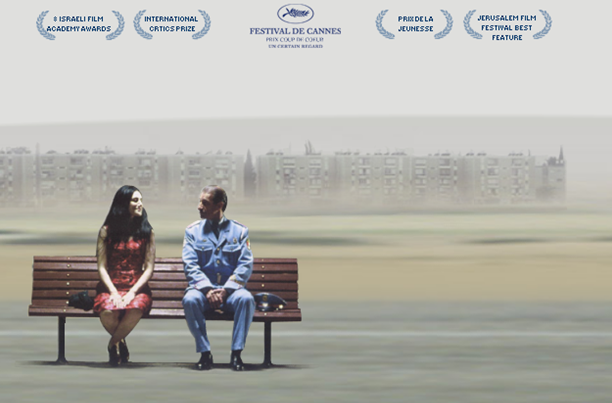
The Band's Visit

An Egyptian traveling ceremonial police band, scheduled to play at an Arab cultural center in Israel, take a bus into a small sleepy desert town. While asking for directions at a rundown eatery, they discover that they are in the wrong town with a similar name and that there are no more buses leaving until the next day.

This is a sensitive, heart-warming and hilarious fish-out-of-water tale that mixes many contrasting sensibilities for much of its subtle comedy. The story is told visually using people’s facial and body expressions to give us a unique glimpse into these Arab and Israeli characters.

Dressed in their meticulous ceremonial police uniforms, the band makes a bizarre sight in this sparse sand-swept Israeli settlement. Stuck with no accommodations, the restaurant owner, Dina (Ronit Elkabetz), offers her place and that of one of her patrons, to temporarily put them up for one night until the next bus arrives.

Taking place over the course of a single night, we follow the eight band members and its rigid stern conductor, Tawfiq (Sasson Gabai), as they spend the night with the local Israeli townsfolk. The Band and the people of the town don’t speak each other’s language and must somehow communicate using broken English and awkward body gestures.

The Band’s Visit (2007) uses the language barrier to great comic effect, as director Eran Kolirin communicates volumes through a combination of facial and body gestures and strategic camera placement. It’s almost like watching a silent film where the story is told visually to show the absurd humor of the situations.

There are powerful underlying emotions in the subtle physical performances that become more important than what is being said. The actors are all the more mesmerizing to watch as they try to communicate what they cannot with dialogue, and movement becomes the main mode of expression.

Tawfiq, the strict band leader, reminds the band members to be on their best behavior as they represent their country and takes its youngest and most rebellious member under his wing to keep an eye on him. When the free-spirited, sexy Dina invites the stoic disciplined Tawfiq out to a bar for drinks, they make for an amusing contrast as she tries to loosen him up with her playful flirtations.

This is a rare gentle gem of a film that leaves one with a warm feeling of a shared human spirit between strikingly opposed cultures and personalities. By no means a political film, there’s a genuine innocence about the human story that captures how external appearances are often completely in contrast with how we feel inside. 

Meanwhile, Haled, the handsome young romantic member of the band, decides to join a couple of teenagers as they go out to a disco and ends up helping a very shy young man to win over an equally shy and awkward girl. 

There is a timeless fairy tale quality about this film as the strangely quiet town in which the band is stranded for an evening seems to be a cultureless twilight zone where both hosts and guests are curious but suspicious of each other.

This is a deeply satisfying film where nothing really happens, except that people from differing cultures are forced to spend a short intimate time together, and those who are open to it are richer for the experience.

JP

Adriatico My Love

Wine, olives, fish and olive oil, Adriatico My Love is a charming romantic culinary comedy and sentimental journey back to a quaint Mediterranean village along the same lines as Under the Tuscan Sun (2003) and Mamma Mia! (2008). But don’t expect a slick Hollywood production like those films. This long in the making Canadian film was made on a shoestring budget using a mix of professional and non-professional actors.

Have digital camera, will travel. A Toronto based cooking show host and single mother Alex (Valerie Buhagiar), whose career is in jeopardy when her producers threaten to pull the plug after the show’s ratings drop, decides that now is the time to take the show to a whole new level. 

Filmed in the ancient historical town of Stari Grad, which literally means ‘Old Town’ and is one of the oldest in Europe, located on the island of Hvar, Croatia, this story will appeal to many Canadians who have roots in Europe and eventually get the irresistible urge to return to the homeland.  

Taking her show on the road, Alex decides to bring along her reluctant daughter Lucy (Dorian Kolinas) and seek out the authentic local cuisine of this small Adriatic settlement where she once had a romantic fling as a young teenager.

The film has a home video quality that’s a little rough around the edges, especially in the beginning stages, but is totally in keeping with the documentarian feel of a TV hostess who brings a video camera on a European trip, not knowing what to expect. 

After arriving at a picturesque rundown village nestled in the seaside shores of the Adriatic Sea, troubled daughter Lucy is ready to return home when their accommodations turn out to be an uninhabitable ruin. However, they quickly warm to the endearing village characters as they acclimatize to their new rustic surroundings.

Director Nikola Curcin allows this gentle story to unfold organically and gives the multicultural cast freedom to experiment and improvise. The cooking scenes, mixed with stunning natural village scenery and accompanied by traditional music, have a fun travelogue quality that keeps the tone light and enjoyable to watch.

Relying on the hospitable locals to put them up in a temporary lodging, mother and daughter begin filming footage for the show, and with the help of some citizens, the two foreign women eventually start discovering the charming local flavors while capturing townsfolk in their natural surroundings as they cook customary dishes. 

This type of film is not easy to make on such a tight sparse budget, but the makers of this film have somehow managed to pull it off quite well under the less than ideal circumstances.

While Alex secretly searches the island for someone from her past, she hides a family secret from her daughter, who makes some romantic connections of her own. But as in real life, some of the mysteries and relationships in the film are not fully explained and left to the audience’s imagination. 

One of the major attractions of this film is the allure of the breathtaking island locations, which gives one a real sense of having been to a unique magical place. Despite the films unpolished homemade look, its heart is in the right place and in the end, our time with the characters pays off as we see them genuinely bond and grow, and become part of an intimate isolated community.

JP

Pacific Rim

No, this is not a new Transformers sequel. But it does feature loud titanic smackdowns, in the kaiju tradition, between mammoth monsters and giant battle robots, in this overwrought, audacious new Sci-fi fantasy epic Pacific Rim. It’s an affectionate tribute to Japan’s epic monster action films and more recent alien invasion and superhero trends.

Can Earth’s cities survive a barrage of attacks by gargantuan plasma-spitting creatures emerging from a fissure in the ocean floor? After earth's nuclear arsenals are no longer an option during the war against the enormous enemies, an unusual group of soldiers and scientists known as The Pan-Pacific Defense Corps is called upon to develop giant military robots to destroy them. 

Inspired by del Toro’s childhood love of Japanese Kaiju films, featuring mega monsters like Godzilla, Mothra, Gamera, Rodan, Ghidorah and Mechagodzilla, the story is a loving amalgam of Roland Emmerich and Dean Devlin’s Godzilla (1998) and Independence Day (1996) with elements from Paul Verhoeven’s Starship Troopers (1997), James Cameron’s Avatar (2009), Tony Scott’s Top Gun (1986) and del Toro’s own Hellboy films.

Set in the near future, when giant robotic suits of armor, known as Jaegers, fail to stop the extra-terrestrial creatures from wreaking havoc on earth’s cities, they’re disbanded in favor of huge anti-kaiju barriers built around heavily populated cities like Hong Kong. But the walls are no defense against the powerful skyscraper sized terrors from beyond and soon the Jaeger program is brought back.

Following in the footsteps of George Lucas and James Cameron, Guillermo del Toro, who directed the Hellboy films and Pan’s Labyrinth (2006), has now created his own original epic sci-fi fantasy franchise for the 12 year old in all of us. Although it has the ambitious spectacle of Star Wars (1977) and Avatar, unlike those beloved films, Pacific Rim doesn’t feel as polished story wise, but has the potential to be a great franchise.

Resurrected with funding by a colorful black-market kingpin, Hannibal Chau, played with hilarious comic relish by Ron Pearlman (Hellboy himself), the new Pan-Pacific Defense program of hotshot Jaeger pilots now has a more steampunkish retro riveted, heavy metal look with an international variety of unique armored robot defenders. 

Visually, we get a chaotic visceral mix of heroic battle scenes between a variety of unnatural colossal creatures and heavily armored robots, the Jaeger pilots manipulating the robots from inside its head, and the military base of strategists monitoring the battle from the ground. As in Star Wars, instead of The Force, here we get The Drift; a kind of neural connection between the two Jaeger pilots when operating their robotic suit.

The movie is full of derivative characters such as the ragtag group of Jaeger pilots who are more like macho WWE wrestlers, as it takes physical and mental stamina to operate the robots, and a comic duo of bickering scientists who seem to be modeled after R2-D2 and C-3PO. Some of the better performances come from Idris Elba, who was recently seen in Ridley Scott’s Prometheus (2012), and the Japanese actress Rinko Kikuchi, who is best known to western audiences for her breakout role in Babel (2006).

This is purely a popcorn film that will appeal to young fan boys and it’s definitely fun to watch the mega mayhem on the big screen. The special effects by Lucasfilm’s ILM are breathtakingly spectacular. If there was ever a film that takes full advantage of the IMAX and 3D format, this is it.

Pacific Rim is dedicated to the late stop-motion effects legend Ray Harryhausen and Ishirô Honda, the Japanese director of many of the original Godzilla films.

Overall it’s a fun blend of sci-fi, action and creature feature disaster tropes, which is what Guillermo del Toro is so good at and where his passion lies. 

JP