2011 Oscar results: The Artist, Hugo big winners

Billy Crystal put on a funny and classy act. Opening the show with his signature montage of footage from the nominated films and inserting himself into the scenes was a great start to the ceremony and he poked a lot of fun at the bankrupt Kodak Theatre calling it the Chapter 11 theatre.  

Also very funny were Iron Man cast Robert Downey Jr. and Gwyneth Paltrow, who were presenters for the Documentary award, being followed around by a camera crew because Robert was making a documentary called ‘The Presenter’, and Chris Rock’s explanation on how easy it is to do voice work for animation presented the animated feature.

I won my Oscar pool again this year predicting 17 of the awards accurately. Admittedly the pool only had three people in it and the other two even peeked at my ballot and still came up short. That’s the nice thing about Oscar pools; everyone sticks to their sentimental choices no matter what.

The Artist and Hugo tied with 5 Oscars each. I expected both these films to do well as they had the most nominations but Hugo did better than I predicted, winning for Cinematography, which I thought would go to The Tree of Life and Visual Effects which I thought would be awarded to Rise of the Planet of the Apes.

Other surprises include The Girl with the Dragon Tattoo winning for Editing and Undefeated winning for best Documentary feature.  The editors of The Girl with the Dragon Tattoo were so surprised to be up at the podium that they were totally unprepared to give a speech and then just said ‘Let’s get outa here’ in disbelief.

Meryl Streep winning for best Actress was a bit of an upset as Viola Davis was favored to win for The Help but most other categories went as expected.

The Artist came out the big winner with Oscars for best Picture, Director, Actor, Costume and Score.

Hugo also won big with Oscars for Cinematography, Visual Effects, Art Direction and two Sound awards.

The Iron Lady won both of its two Oscar nominations for best Actress (Meryl Streep) and Makeup.

The Descendants won one of its five nominated Oscars for Adapted Screenplay.
Woody Allen’s Midnight in Paris won one of its four Oscar nominations for best Original Screenplay.

The Help won one of its three nominations for best Supporting Actress (Octavia Spencer)

Beginners won the Oscar for best Supporting Actor (Christopher Plummer)

Iran’s A Separation won for best foreign film.

Rango won for best animated feature as predicted.

The Muppets won the Oscar for best Song ‘Man or Muppet’

Extremely Loud & Incredibly Close, Moneyball, The Tree of Life and War Horse all nominated for best film came out with no wins.


JP

The Tree of Life, The Artist, Drive: top rated films of 2011

Annual summary of 2011 critic's top10 lists

A sure sign that 2011 was a good year in film is the diverse number of films that made up critic’s top ten lists this year. Although there were a large number of films that came up on everyone’s list, there were also many I had never heard of and there were representations from all film genres. 

The family drama seems to be popular this year with women figuring prominently in them; The Tree of Life, Melancholia, The Descendants, A Separation, Martha Marcy May Marlene,  Margaret, We Need to Talk About Kevin, The Skin I Live In, Poetry and Shame.

Although the Tree of Life was the best rated film of the year according to critic’s top 10 lists it was not the best rated film by many movie goers. Most people and friends of mine that saw it were confused by it and thought it was weird. It’s quite unlike any movie I’ve ever seen but the experience left me somewhat baffled. There is no doubt that the movie is beautifully photographed and is likely to win an Oscar for best cinematography. 

The story centers on a suburban family in 1950s America and is about the stages of life and our experiences growing up from birth. It even goes into a cosmic story that tries to show us the birth of the universe. I guess it tried to show how all our experiences and tragedies in life are just part of a larger life cycle. It’s a very philosophical and meditative film that feels like a poetic church sermon and I suppose that many critics liked it because it showed a lot of common experiences that everyone could relate to as we grow up. It’s a wonderful film but definitely an acquired taste. It’s more of an art-house film for serious cinephiles but it’s probably not for the casual film goer.

The Artist looks to be the popular favorite with most people and will be the one to beat at the Oscars this year as it has already won the top honors at the Critics’ Choice Movie Awards, The Golden Globes and the British Film Awards (BAFTA). This is quite an extraordinary film in today’s movie environment of special effects driven films because this is a black and white silent film made in the style of the old Hollywood silent films of the 1920s.

Drive will appeal to a larger audience as it is an intense, suspenseful gangster film along the same lines as Léon: The Professional (1994) with excellent performances by Ryan Gosling and Albert Brooks. The human story is very realistic and compelling; a stunt driver and car mechanic hires himself out to criminals as a getaway driver. This is an extremely dangerous job but he is very good at it, so when he meets a girl whose boyfriend gets into trouble with a mafia boss he offers to help him do one more job that will release him from his debt. Of course it all goes very wrong and there is a lot of bloodshed. 

Below are the results of this year’s critic’s top 10 lists compiled form 160 lists, with highest rated films appearing on the most number of lists and ranked highest on each list.  The Tree of Life appeared on 89 lists and on 24 of them as number 1. The Artist appeared on 59 lists and on 20 of them as number 1. Drive appeared on 60 lists and 14 of them as number 1. See the full list of critic's top 10 lists here.

Summary of 2011 Critics Top 10 Lists

1
The Tree of Life
2
The Artist
3
Drive
4
Hugo
5
Melancholia
6
The Descendants
7
Moneyball
8
A Separation
9
Certified Copy
10
Shame
11
Take Shelter
12
Martha Marcy May Marlene
13
Meek’s Cutoff
14
Margaret
15
Tinker Tailor Soldier Spy
16
Beginners
17
The Girl with the Dragon Tattoo
18
Bridesmaids
19
We Need to Talk About Kevin
20
Uncle Boonmee Who Can Recall His Past Lives
21
A Dangerous Method
22
Midnight in Paris
23
Margin Call
24
Weekend
25
The Skin I Live In
26
Poetry
27
Rise of the Planet of the Apes
28
Cave of Forgotten Dreams
29
The Interrupters
30
War Horse

JP

Star Wars: Episode I - The Phantom Menace 3D

All six films of the Star Wars saga are getting the 3D treatment and will be released into theaters one at a time each year starting with episode I February 10th of this year.

The Phantom Menace (1999) was probably one of the most anticipated films in recent history and I was as excited as anyone lining up to see it the first day it was released. After all, it was the first new Star Wars film to be made in sixteen years. Unfortunately the first film in the new prequel trilogy was probably the least liked by the original fans. Younger new fans however loved The Phantom Menace, I guess for the same reason that younger fans loved Return of the Jedi back in 1983. In the same way that younger fans back then loved the cute Ewoks, the younger fans in 1999 loved the funny looking, clumsy character of Jar Jar Binks, plus it had a cute young boy hero who will eventually become the misguided Darth Vader. 

The story is well thought out and is a good introduction to many new characters as well as setting up the circumstances for the next films. On its own the movie is a bit unsatisfying, taking a long time to set up the story and missing many opportunities to create suspense, but it works better if you see it together with Attack of the Clones (2002) and Revenge of the Sith (2005), the next two films that won’t be released in 3D until 2013. 

It follows a young Obi-Wan Kenobi and his master, Qui-Gon Jinn, as they are sent to negotiate a peace treaty with the Trade Federation who is illegally blockading a peaceful planet to get their way. Unknown to the Jedi however, is the presence of a mysterious dark Sith Lord, an extremely powerful evil Jedi who has turned to the dark side of the Force and is manipulating the actions of the Trade Federation from an unknown location by intimidation, thus the title of the movie; The Phantom Menace.

During the course of rescuing the Queen of Naboo from the invading Trade Federation, they run into a slave boy working in a junk shop on Tatooine and soon discover that he has very special powers. Believing this boy to be of importance to the Jedi and the Republic, Qui-Gon Jinn manages to win his freedom and bring him back with them to the Republic home world of Coruscant for special Jedi training. 

When he is rejected by the Jedi council and the Queen’s pleas for help are also rejected by the Republic senate, the Jedi and the Queen decide to return to Naboo with the young boy, to do what they can to defend the planet themselves. And Jedi master Qui-Gon Jinn decides to take on the task of training the boy himself, against the Jedi council’s wishes.

Although the visual effects are as spectacular as you would expect from a Star Wars film, it just doesn’t have the same chemistry and humor between the main characters that the original trilogy has going for it, and the actors all look very stiff and unnatural in their roles, as if they are doing a read through rehearsal without any emotion. This improved somewhat over the course of the next two films but it never reached the level that the original movies had from the very beginning.

The 3D effect is mostly very subtle and doesn’t really add much to the film. Only a few scenes benefit from the new technology. The prologue scroll at the beginning of the films as it floats out into space looks great in 3D and most of the space sequences with ships flying by the camera give added dimension.  Unfortunately the picture was extremely dark in the theater where I watched it and most of the 3D effects were lost due to a much darker image resulting in loss of color and clarity. The underwater Gungan city sequences especially are way too dark.

This is the first time we are seeing the new digital Yoda and digitally restored version of the film in theatres, which was released on Blu-ray recently.  So if you own the Blu-ray set already, the movie probably looks better on your home theatre than this 3D version does.  But then again, there is something about seeing Star Wars in a big theater that just brings back good memories of seeing the films for the first time.

JP

Miss Bala

This is a riveting, shocking Mexican film based on actual events in the ongoing war on Mexico’s drug cartels and its vicious, murderous human toll on innocent people. Miss Bala, like Maria Full of Grace (2004) and The Devil’s Double (2011), follows an innocent individual as she is suddenly forced into cooperating with a violent gang or mafia at great risk to her life, but must continue through with the ordeal until the end, not knowing if she’ll survive.

Mexico has become an incredibly dangerous, lawless place with parts of the country being controlled by extremely rich, brutal and heavily armed drug lords and their network of corrupted officials. Anyone who has followed the news in the past few years would be familiar with how little power the government has against these cartels. (See recent news articles below) There are so many stories of places in Mexico where brutally murdered and decapitated bodies of police and innocent bystanders are found lying in the streets or hanging from bridges almost every day. The film tells us that 36,000 lives have been lost since the war on drugs was launched in Mexico between 2006 and 2011, but that number has been increased to 47,500 since the movie was released at Cannes early last year.

What makes this film so mesmerizing is the powerful way that the events are filmed and makes you believe you are actually handcuffed to a 23 year old beauty pageant contestant as she is taken through her ordeal. The film is told completely from her point of view as she suddenly finds herself in the middle of a war zone when a drug cartel makes a hit on people at a party that she happens to be attending with her friend.  

The camera never stops filming as we see how the leader of the cartel, Lino, takes a liking to her and spares her life as he uses her to his advantage during some harrowing and surreal circumstances. Because the movie is filmed like a documentary we feel as disoriented and anxious as she does, as she is thrust into the scariest situations, never knowing who to believe or what is happening.

It makes for a powerful experience as we are shown the inner workings and depraved tactics of drug lords and the police who make deals with some cartels as they fight others. Like a documentary, there is no sound track, making it even more unnerving. The role of the young woman, named Laura Guerrero, played by Stephanie Sigman, is excellently portrayed with just the right amount of inner strength and vulnerability to be totally believable, not going too far in either direction. I will not be surprised if her performance in this film gives her career a huge boost. Lino, played by Noe Hernandez, is so convincing as the cartel leader and has such a menacing and lifeless expression that you cannot help but feel as if you’re looking at the real thing.

Miss Bala screened at the Toronto International Film Festival (TIFF) last year and was extremely well praised for its realistic depiction of a brutal war that’s out of control, consuming everyone in its path, and showing no sign of ending. This movie is all about the performances and the ‘you-are-there’ documentary filming style and will leave you in a state of shock. 

In the middle of the film, a beauty pageant host asks Laura what she desires most, fame or money, but Laura is unable to answer after the experiences she has been forced to endure. Her quest for fame in the pageant and Lino’s quest for money has left both of them lifeless and the country full of fear.

Mexican police living in guarded hotels after string of murders

Mexico’s drug war kills more than 47,000 in 5 years

JP

Blade Runner, 'like tears in the rain'

This year marks the 30th Anniversary of what many consider to be the greatest Science Fiction film of all time. Since it first hit movie screens in 1982, Blade Runner still holds up amazingly well today. The thought-provoking concepts and visual splendor of the film have not aged at all, and was a precursor to cyber punk. In fact, it’s actually more relevant today than it was 30 years ago. This movie is like The Matrix (1999) of our generation and arguably the most influential and enduring cult film of our time. It is loosely based on a story from the brilliant mind of one of the most surreal and prolific Sci-fi writer of our time, Philip K. Dick, and made by one of the most visually innovative and talented directors of our time, Ridley Scott.

It was not a big hit, and underrated by critics when it first came out in theaters in the summer of 1982. Yes, I did see it that summer, having read the novel previously because I was already a fan of Harrison Ford’s portrayals as Han Solo in Star Wars (1977) and The Empire Strikes Back (1980), and Indiana Jones in Raider of the Lost Ark (1981) just a year earlier. I remember many critics at the time accusing Ridley Scott of being more interested in his sets than the story, which may be true, but the movie was ahead of its time and ultimately had a lasting impact on our culture and cinema. Its visual style of a bleak urban dystopian, Moebius influenced, discarded world, with a mix of vintage and grungy futuristic look has become iconic and copied by countless films and directors who have come after. 

Blade Runner is a quiet mood piece with a haunting, eerie and bluesy soundtrack by Vangelis, a futuristic film noir that overwhelms you with its abundance of visual detail, and completely immerses you in its plausible vision of a depopulated future world, where most of the people have left to colonize another planet and the remaining people are misfits and outcasts of society that didn’t qualify for an off-world life. Earth has become an outdated, industrial garbage planet, stripped of all its resources, where most animals are now extinct and everyone owns mechanical pets.

The story, adapted from the Philip K. Dick novel ‘Do Androids Dream of Electric Sheep?’ is about an ex-cop bounty hunter named Rick Deckard, played by Harrison Ford, who hunts down and terminates escaped rogue androids that are being used as slave labor on other planets and are seeking refuge on Earth by hiding among the general population. 

The androids in Blade Runner however, called replicants in the movie, are not like the robots or cyborgs that we usually find in other movies like Terminator (1984) or RoboCop (1987). These advanced robots are physically indistinguishable from humans in every way. They look like real people and even have emotions, urges and memories that are implanted at birth. They are more like clones, manufactured with organic materials but with a shorter life span. The only way that an android can be detected is with an empathy test, administered with a machine that measures emotional responses to a series of questions designed to evoke empathy, which is the only emotion that replicants are not capable of feeling; the ability to identify with the suffering or joy of other living creatures.

The other problem is that, the only way this test can be administered, is with the cooperation of the test subject, and in the case of an android, that is not done without considerable danger to the person who is giving the test, as androids are much stronger than humans, if you can even get the android’s cooperation in the first place. To complicate things further, in some cases the replicant doesn’t even know that it is an artificial person, giving rise to the possibility of a sexual relationship between android and human. Consequently, Deckard finds that his ability to empathize with replicants, increasingly gets in the way of the difficult task of exterminating them. 

It’s no wonder that this highly original premise and the first major movie based on his work, made Philip K. Dick’s reputation in the literary world as a philosophical and prophetic writer of alternate realities, and a highly sought after author in Hollywood. Since Blade Runner, Philip’s novels and short stories have been the inspiration for many popular films including Total Recall (1990), Minority Report (2002), A Scanner Darkly (2006) and The Adjustment Bureau (2011).

Ridley Scott is considered the master of visually stunning photography and set design in modern cinema, and Blade Runner is widely considered his masterpiece when it comes to a fully realized, visually breathtaking work of fiction. Ridley started his career with such strikingly beautiful films as The Duelists (1977) and Alien (1979) before making Blade Runner, and went on to make highly successful  groundbreaking films like Legend (1985), Thelma & Louise (1991), Gladiator (2000), Black Hawk Down (2001), Kingdom of Heaven (2005) and Robin Hood (2010).

For more information about the making and legacy of Blade Runner read the excellent book by Paul M. Sammon titled ‘Future Noir: The Making of Blade Runner’, and also watch the definitive documentary on the making of the film titled ‘Dangerous Days: Making Blade Runner’.

JP

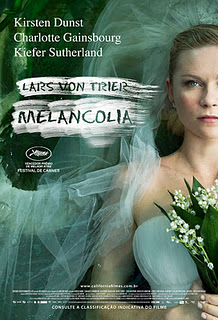
Take Shelter from Melancholia by Surviving Progress

I suppose it’s appropriate that with today’s economic and environmental disasters looming large, we are seeing a number of films predicting the end of mankind in ways from which we cannot protect ourselves. 

Three new films that I saw recently in close proximity, all spelled out our doom in very different ways, with little or no hope of survival. Perhaps the current global economic crisis has people wondering what we’ve gotten ourselves into and how the end will come, instead of how it can be prevented. It’s as if we know that we cannot save ourselves from our own destructive nature, and we expect the Earth to retaliate for our blatant abuses and tell us that our time is up. Will the end of our planet be our own undoing, or will it come through some natural, unstoppable disaster?  

These three films all explore the inevitable global end and extinction of mankind on Earth. Two of them by natural phenomena from which there is no protection; Melancholia and Take Shelter, and if that doesn’t humble you, there is a documentary that very clearly illustrates how we will be the architects of our own demise; Surviving Progress. 

Melancholia and Take Shelter are both about individuals looking up at the sky and, through instinct or visions or dreams, somehow sense a coming global disaster, but are unable to express this to others except by what appears to be very unusual and disturbing behavior to the people around them. Both movies center on this person and their strange behavior and the effect it has on their family or community. When the disaster eventually strikes, they seem to be the ones, at least mentally, to be most prepared for it, if not physically. 

Visually both these films are appropriately ominous and eerily photographed with dreamlike, nightmare images and minimal visual effects. As these films are dramas that focus on intimate human relations rather than the physical destruction of the planet, as with Roland Emmerich’s 2012 (2009), they are slow and pensive films that can be depressing and boring for some.

Surviving Progress is a documentary about our capacity to kill the planet and ourselves along with it. It argues that, while we as a society have progressed in our technology and our culture has changed as a result, we, as people, still have all the same primitive instincts of our hunting and gathering ancestors, and that, what we call progress, is actually becoming detrimental to our survival.

Our ability to question ‘why?’ has made us successful in the past but we are now too successful to the point that we are destroying ourselves and the planet. The same abilities that helped us survive in our early history are destroying our planet today. To illustrate this, the movie uses an example from our past, when, as cavemen, we hunted Mammoths to sustain us with food and tools, and we became good at killing them. But eventually we became too good when someone figured out that we could kill many Mammoths at once by herding them over a cliff. Mammoths quickly became extinct, depriving us of an important renewable resource that would have sustained future generations indefinitely. We still have the same mentality today. Consumerism is destroying us and our planet, whether we are stuffing our bodies with food or stuffing our houses with stuff, we are literally consuming ourselves to death.

The film now turns to Wall Street, which is seen as an oligarchy of affluent people with political power to effect change to benefit their cause, which is to make more money and become more affluent. Corporations and economists, says David Suzuki, are totally out to lunch with their economic model of growth, which is completely unrealistic for our world. Corporations and the affluent would rather see 90% of the planet’s people starve and die, and see all the planet’s forests and resources destroyed before ever giving up their desire for more wealth.

We have gone from destroying Mammoths to plundering the last of our natural global resources with no thought for the future. It’s a grim tale of human greed and ignorance that will make Melancholia and Take Shelter seem like the justice we deserve. But as a character from Melancholia says ‘Don’t grieve for the Earth, the Earth is evil.’ And an expert in Surviving Progress characterizes humans as behaving like a virus, killing everything in its path. 

JP

My favourite films of 2011

So here is my list of favorite films that I saw during the 2011 film year so far. I have obviously not seen every film that was released this year and I will probably see more films from 2011 in the future that I might want to add to this list, but of the 75 films that I did see in 2011, these were the ones that I enjoyed watching most and would watch again. Films that I saw that didn’t make this list may also have been good, but I would probably not consider watching them more than once.  

My criteria for this list are naturally subjective as everyone has their own taste but for me a film must have the following: visually it should be unique, bold and stimulating, in other words, the world that has been created must be immersive and authentic with a consistent visual style. The story concept should be interesting, suspenseful and character driven. Performances should be logical and realistic given the situation, character and style of the film, and it should be an emotionally engaging experience overall. (Not too much to ask, is it?)

It was a particularly good year for Sci-fi/fantasy and Feel Good/Comedy/Romances, and there were also some high points in Animation and Foreign films. Below is my list organized by Genres and then in chronological order of release date. (Click on the highlighted films to read my reviews)

Sci-fi/fantasy:                                                                   Director
The Adjustment Bureau                                                      George Nolfi    
Battle: Los Angeles                                                            Jonathan Liebesman
Source Code                                                                      Duncan Jones
X-Men: First Class                                                              Matthew Vaughn
Super 8                                                                              J.J. Abrams                 
Green Lantern                                                                    Martin Campbell
Attack the Block                                                                 Joe Cornish                 
Cowboys & Aliens                                                              Jon Favreau
Rise of the Planet of the Apes                                            Rupert Wyatt     

Action Adventure/Suspense thriller:
The Eagle                                                                            Kevin Mcdonald           
The Devil’s Double                                                              Lee Tamahori                           
Colombiana                                                                        Olivier Megaton
Drive                                                                                 Nicolas Winding Refn   
Sherlock Holmes: A Game of Shadows                                  Guy Ritchie

War:
Essential Killing                                                                   Jerzy Skolimowski
Winter in Wartime                                                              Martin Koolhoven

Drama:
Incendies (Scorched)                                                           Denis Villeneuve                       
Alamar                                                                               Pedro González-Rubio              
Contagion                                                                           Steven Soderbergh
Circumstance                                                                     Maryam Keshavarz                    

Comedy/Feel Good/Romance
Win Win                                                                             Thomas McCarthy
Super                                                                                 James Gunn
Midnight in Paris                                                                 Woody Allen
Submarine                                                                          Richard Ayoade
The Names of Love                                                              Michel Leclerc                          
The Women on the 6th Floor                                                Philippe Le Guay
Hugo                                                                                  Martin Scorsese
My Week with Marilyn                                                         Simon Curtis
The Artist                                                                            Michel Hazanavicius
 
Animation:
Rango                                                                                 Gore Verbinski             
Rio                                                                                     Carlos Saldanha
Kung Fu Panda 2                                                                  Jennifer Yuh                 
Cars 2                                                                                John Lasseter, Brad Lewis
Puss in Boots                                                                       Chris Miller       
Happy Feet 2                                                                       George Miller
The Adventures of Tintin                                                     Steven Spielberg

Documentaries:
Circo                                                                                   Aaron Schock  
Armadillo                                                                            Janus Metz      
Bill Cunningham New York                                                     Richard Press  
Exporting Raymond                                                              Philip Rosenthal
Life in a Day                                                                        Kevin Macdonald
SENNA                                                                                 Asif Kapadia     

JP